2026-11-13 ·
Ticks and Fleas in Lowcountry Yards: Where They Hide Under Live Oaks and Pine Straw
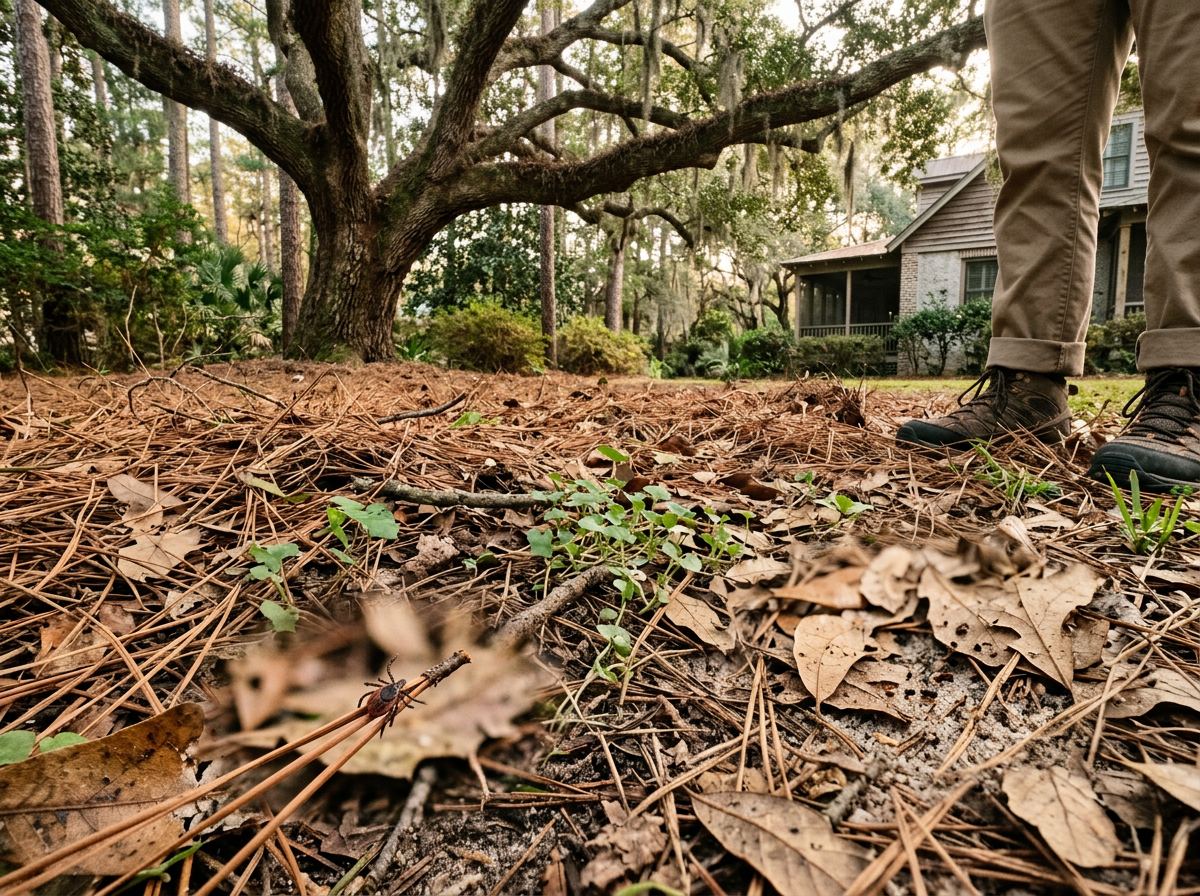
Ticks and fleas commonly hide in the deep pine straw layers and shaded duff under live oaks that shade many antebellum and raised Lowcountry homes in neighborhoods like The Point and Spanish Point. These spots stay cool and moist even during hot summers, giving the pests protected resting places near the ground where pets and people pass.
Pine Straw and Leaf Litter Layers
Pine straw mulch around live oaks and shrub beds creates a perfect microclimate for ticks and fleas because it traps humidity while blocking direct sun. In yards along Battery Creek or the tidal edges near Port Royal, this litter also collects after king tides and storm surge, adding organic debris that holds moisture longer. Our technicians inspect these layers during yard visits because fleas often breed in the top inch or two while ticks climb the lower vegetation to wait for hosts. Homeowners can rake and replace pine straw in high-traffic zones near porches and outdoor kitchens to reduce shelter. Checking under decks and raised house piers on crawl spaces also reveals hidden accumulations where the pests rest during the day. Our seasonal mosquito program page explains how we handle this on a local lot.
Shaded Resting Areas Under Live Oaks
The broad canopies of live oaks draped in Spanish moss keep ground temperatures lower and block wind, so ticks drop from low branches onto passing animals while fleas remain in the soil below. Properties in Mossy Oaks and Higginsonville often feature these mature trees near marsh-front lots, where the combination of shade and nearby tidal flooding keeps conditions ideal. Our technicians apply residual treatments to the underside of leaves and lower trunks because that is where the pests spend most of their time between meals. Garden beds planted with ivy or bromeliads under the same oaks add extra cover that fleas use for breeding. Regular removal of fallen branches and leaf piles prevents new hiding spots from forming each season. Yards in Burton deal with this regularly.
Practical Checks Around Docks and Outbuildings
Boat covers, dock boxes, and storage sheds near the water collect pine straw and debris that fleas and ticks use after tidal flooding recedes. On Lady's Island properties with jon boats or kayaks stored on the lot, these items create shaded pockets close to the ground where the pests survive the long warm season. Checking plant saucers, gutters, and tarps around outbuildings reveals additional breeding sites that connect to the main yard. Readers can also review the Standing Water Checklist After a Lowcountry Storm or King Tide for related moisture issues that support these pests. Tick and Flea Yard Treatment focuses on these exact zones with barrier applications that reach under decks and into shrub beds. The same applies to properties in Laurel Bay.
Connecting to Broader Yard Management
Many of the same shaded spots that shelter ticks and fleas also harbor mosquitoes and no-see-ums, so addressing one group often improves control of the others across the property. Marsh-front homes on St. Helena Island and Dataw Island face extra pressure because high marsh flooding deposits organic matter that feeds all three pests. Our technicians combine inspections of crawl space vents and drainage swales with treatments that reach the soil and vegetation where fleas and ticks rest. Homeowners who notice increased activity near screened porches or outdoor kitchens can request a full yard inspection to map the hiding locations. Checking Beaufort County Mosquito Control notices keeps residents informed about area-wide efforts while private treatments handle the individual lot level. Homeowners in Okatie ask us about this often.
Seasonal Timing and Follow-Up Steps
Activity peaks from March through November in the humid subtropical climate, with spikes after summer thunderstorms and fall king tides that refresh moisture in the pine straw. Re-treatment intervals depend on rain wash-off and new leaf drop that rebuilds litter under the oaks. Property owners in Burton and Laurel Bay often schedule follow-up visits when they see pets scratching more or notice small dark specks on light-colored siding. Combining these checks with drainage improvements around retention ponds and swales reduces the overall suitability of the yard for all biting insects. This layered approach helps keep the shaded areas under live oaks from becoming permanent shelters season after season.