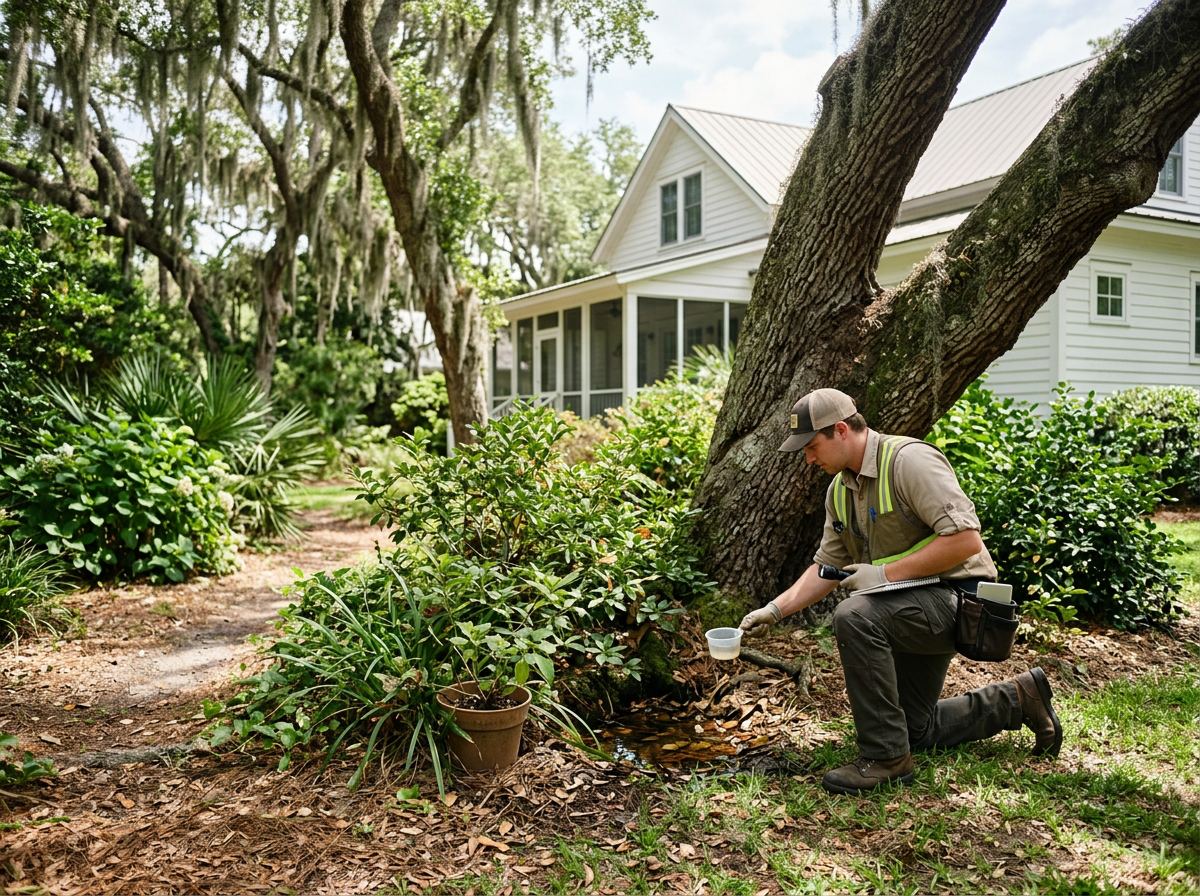
Beaufort lots along the Beaufort River and Battery Creek often feature raised Lowcountry homes with crawl spaces, live oak canopies draped in Spanish moss, and marsh edges that flood during king tides. Salt marsh mosquitoes breed in the high marsh grasses while Asian tiger mosquitoes and container breeders develop in plant saucers, tree holes, birdbaths, and gutters. Our technicians walk the full property at dawn or dusk when activity peaks, checking under decks, shrub beds, ivy, and dock boxes where adults rest during the day after summer thunderstorms.
We map every potential breeding site created by the humid subtropical climate, including drainage ditches, retention ponds, and tarps covering boats on lots in The Point, Spanish Point, or Mossy Oaks. Technicians use a backpack mist blower for barrier treatment on leaf undersides and apply larvicide or insect growth regulator to water that cannot be drained. The work focuses on the individual yard rather than the county's truck and aircraft sprays that cover public roads and larger areas but leave private porches and screened outdoor kitchens untreated.
After locating standing water and shaded resting areas, we treat crawl space vents, downspout extensions, and bromeliads common on antebellum and Victorian homes in the Historic District. Re-treatment intervals account for rain wash-off and tidal flooding that refreshes breeding sites on marsh-front properties. The inspection also covers nearby neighborhoods like Higginsonville and Burton where military housing and vacation rentals sit close to Cypress Wetlands and the Broad River.
Technician insight
In Beaufort the thing that catches most people out with Mosquito Yard Inspection is the live oak canopy and Spanish moss that hold moisture and shade resting mosquitoes even after a thunderstorm passes; homeowners often clear ground-level containers but miss the tree holes and the ivy growing up the piers of older raised houses along the river.
Marsh-Front Lot After King Tide
A property in Spanish Point had standing water refreshed by tidal flooding under the dock and in drainage swales. Our technicians located larvae in the high marsh edge and tree holes in the live oaks. We applied larvicide to the water features and barrier treatment to the shaded resting spots under the deck and along the shrub line.
Mosquito Yard Inspection Services We Offer
✓Standing Water Assessment
Technicians locate and catalog containers, tree holes in live oaks, and drainage swales where larvae develop on Beaufort tidal lots.
✓Shaded Resting Area Treatment
We apply residual barrier material to the underside of leaves, shrub beds, and under raised houses where mosquitoes rest between blood meals.
✓Tidal Marsh Edge Inspection
Properties near Port Royal Sound and Coosaw River receive checks for high marsh breeding triggered by king tides and storm surge.
✓Container Breeder Elimination
Our team identifies plant saucers, birdbaths, bromeliads, and boat covers that hold water for Asian tiger mosquito larvae.
✓Crawl Space and Deck Inspection
We examine vents, piers, and the space under decks on raised homes in neighborhoods like Spanish Point and The Point.
How it works
- 1
Property Walk-Through
Technicians start at the street and move through the yard, noting live oak shade, marsh proximity, and any standing water on the lot.
- 2
Breeding Site Mapping
Every container, gutter, tree hole, and drainage feature is recorded with attention to tidal flooding patterns common in Beaufort.
- 3
Targeted Application
We treat resting vegetation with a backpack mist blower and apply larvicide to water that cannot be removed from the property.
- 4
Follow-Up Guidance
Homeowners receive notes on re-treatment timing based on summer thunderstorms and the next expected high tide cycle.