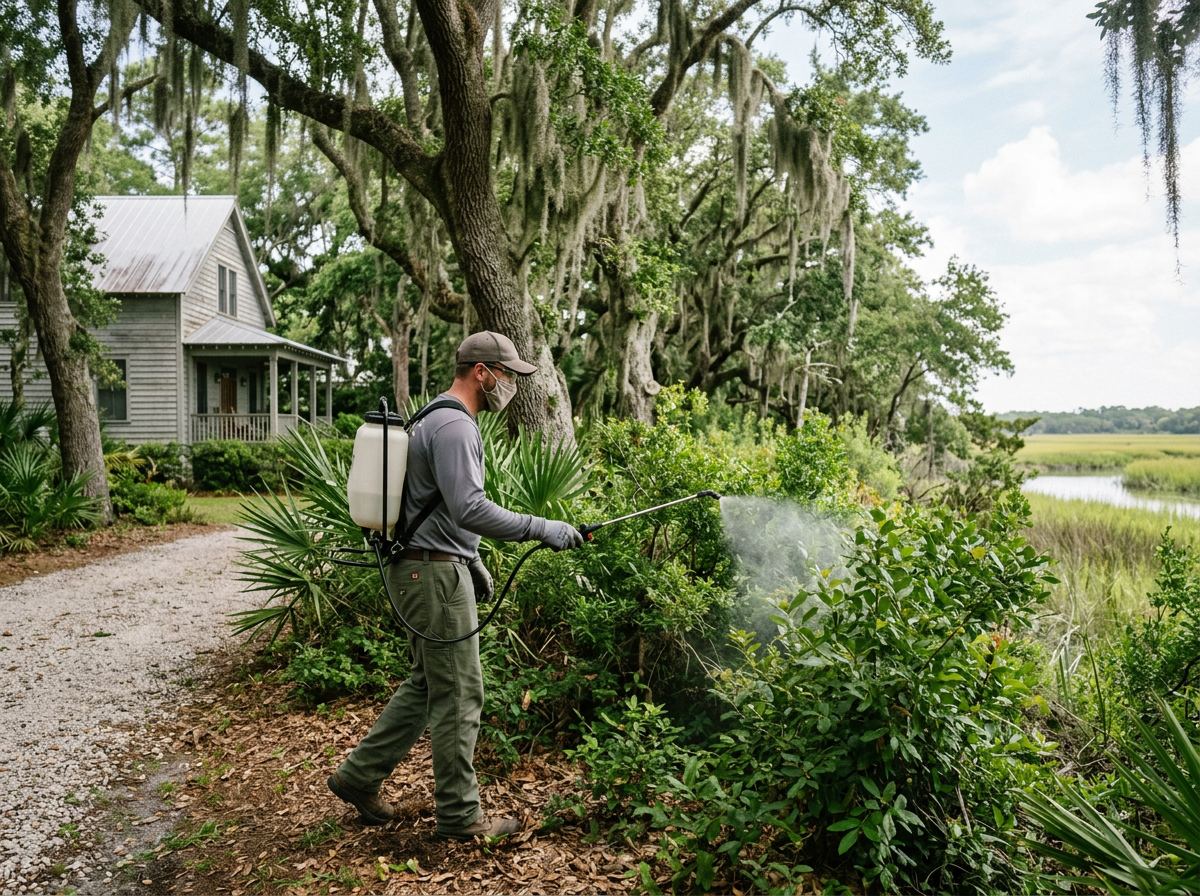
No-see-ums, also called biting midges or sand gnats, thrive in the humid subtropical Lowcountry around Beaufort where tidal salt marsh borders nearly every neighborhood from The Point to Spanish Point. These tiny insects breed in the high marsh and drainage swales that flood during king tides and summer thunderstorms, then move into shaded resting spots under live oaks draped in Spanish moss, beneath raised house piers, and inside crawl space vents on antebellum and Victorian homes. Our technicians focus on these exact sites because county sprays cover public roads and larger areas but leave individual yards, docks, and porches untreated.
During an inspection we walk the lot at dawn or dusk when activity peaks, checking plant saucers, birdbaths, bromeliads, tree holes, gutters, and any containers that hold even small amounts of water after rain. We also examine marsh-front edges and retention ponds where larvae develop, then apply residual barrier treatments to the underside of leaves, shrub beds, ivy, and under decks using a backpack mist blower. On lots near Battery Creek or the Intracoastal Waterway we pay special attention to tidal flooding patterns that create fresh breeding pockets after each high tide cycle.
Re-treatment timing accounts for Beaufort's long mosquito season from March through November and the way daily summer storms plus occasional tropical systems wash away previous applications. We combine perimeter barrier work with larvicide in water that cannot be drained and insect growth regulator in ditches and swales. This property-level approach reaches the shaded resting areas and breeding sites that county-wide efforts cannot address on lots in Downtown Beaufort, Higginsonville, or along Lady's Island Drive.
Technician insight
In Beaufort the thing that catches most people out with No-See-Um Control is how king tides push water right up to the edge of lots along the Intracoastal and Battery Creek, creating fresh breeding pockets in the high marsh that homeowners never see from the house. Those spots need attention after every big tide, especially on older raised homes in The Point and Spanish Point where the piers sit close to the water line.
Marsh-Edge Lot Near Spanish Point
The homeowner noticed bites during evening hours on the screened porch despite county sprays passing nearby. We found active breeding in drainage swales that flooded with the last king tide and resting midges under the live oaks and house piers. Barrier work along the marsh perimeter plus larvicide in the swales reduced activity on the lot.
No-See-Um Control Services We Offer
✓No-See-Um Barrier Treatment
We apply residual material to foliage and resting surfaces around the yard perimeter so daytime biters encounter treated zones when they move from the marsh.
✓Tidal Marsh Edge Inspection
Technicians check high marsh lines and drainage ditches on marsh-front lots for new breeding after king tides and apply targeted larvicide where water remains.
✓Crawl Space and Pier Treatment
Raised Lowcountry homes on piers receive focused applications under the structure and around vent openings where no-see-ums rest during the day.
✓Container and Standing Water Service
We locate and treat plant saucers, birdbaths, tree holes in live oaks, and other small water holders that produce no-see-ums on residential lots.
✓Dock and Outdoor Kitchen Protection
Screened porches, docks, and outdoor kitchens receive barrier applications to reduce bites during evening use near the water.
How it works
- 1
Lot Walk And Site Assessment
We start with a full walk of the property noting marsh proximity, shaded areas, and any standing water sources on lots in neighborhoods like The Point or Spanish Point.
- 2
Breeding Site Treatment
Larvicide or insect growth regulator is placed in water that cannot be removed, including ditches, swales, and containers around the home.
- 3
Barrier Application
A backpack mist blower delivers residual treatment to leaf undersides, shrub beds, and resting spots under decks and raised houses.
- 4
Follow Up Timing
We schedule the next visit based on recent rainfall, tidal flooding, and observed activity to maintain coverage through the active season.