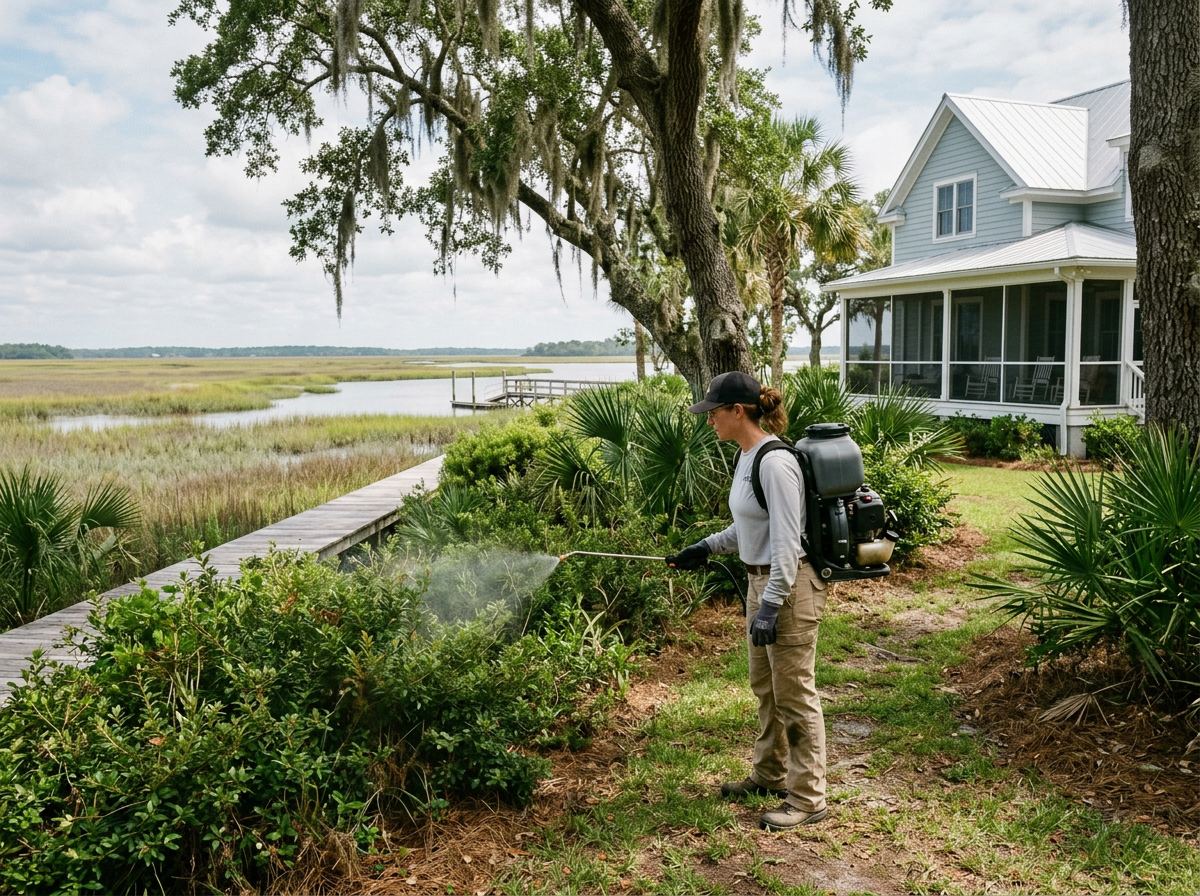
Marsh-front properties along the Beaufort River and tidal creeks on Lady's Island face constant pressure from salt marsh mosquitoes that breed in the high marsh and move inland with king tides and storm surge. These mosquitoes rest in the dense shade of live oaks draped in Spanish moss and under the piers of raised Lowcountry homes. Our technicians walk the lot edges, check drainage swales, retention ponds, and any water trapped after afternoon thunderstorms, then treat the actual breeding sites and resting areas that public county work never touches.
Asian tiger mosquitoes also breed in containers and plant saucers around screened porches and outdoor kitchens while biting midges emerge from the same marsh edges at dusk. We inspect under decks, crawl space vents, boat covers, and dock boxes where daytime biters hide, then use backpack mist blowers to place residual material on the underside of leaves in shrub beds and ivy. This property-level work follows the daily tidal cycle and accounts for rain wash-off that resets many untreated yards within days.
Thunderstorms and seasonal flooding from the Coosaw River and Port Royal Sound push new larvae into ditches and swales that homeowners cannot drain. Our crews focus on larvicide in those spots plus barrier work along the marsh transition zone, targeting the exact resting spots created by the humid subtropical climate and dense tree cover. The result is a treatment shaped to the lot itself rather than the broader county program that stops at the road.
Technician insight
In Beaufort the thing that catches most people out with Marsh-Front Property Mosquito Control is how king tides and afternoon thunderstorms keep refilling the same swales and ditches right up against the house; if you skip the low spots closest to the marsh edge the mosquitoes are back the next night even after a full foliage treatment.
Tidal Creek Lot on Lady's Island
A homeowner on a marsh-front property near the McTeer Bridge noticed heavy dusk activity around the dock and under the raised house. Our technicians found larvae in several drainage swales flooded by recent high marsh tides and resting mosquitoes in the live oak canopy. We treated the water sites and applied residual material to the foliage and crawl space vents. The owner reported noticeably fewer bites on the porch within two days.
Marsh-Front Property Mosquito Control Services We Offer
✓Tidal Creek Edge Barrier Treatment
Technicians apply residual material to vegetation along marsh edges and tidal creeks where salt marsh mosquitoes move onto the lot after high tides.
✓Raised House Crawl Space Treatment
We treat piers, vents and shaded areas beneath elevated homes where mosquitoes rest during the day on marsh-front properties.
✓Dock and Porch Residual Application
Targeted treatment reaches dock pilings, screened porches and outdoor kitchen structures that sit close to tidal water and receive daily mosquito pressure.
✓Standing Water Larvicide Service
Our crews locate and treat undrainable water in swales, retention ponds and low spots created by king tides and summer thunderstorms.
✓Live Oak Canopy and Shrub Bed Treatment
Backpack application covers the dense shade under live oaks and in ivy beds where mosquitoes rest between blood meals on Lady's Island lots.
How it works
- 1
Lot Walk and Tidal Assessment
Technicians inspect the full property, noting marsh proximity, drainage features, and any water left by recent tides or storms.
- 2
Breeding Site Identification
We locate larvae in standing water and mark resting areas in foliage, under decks, and around docks before any material is applied.
- 3
Targeted Application
Barrier treatment reaches foliage and resting spots while larvicide goes into water that cannot be drained.
- 4
Re-treatment Planning
We note tide cycles and weather patterns that affect the lot and set the next visit interval based on observed conditions.