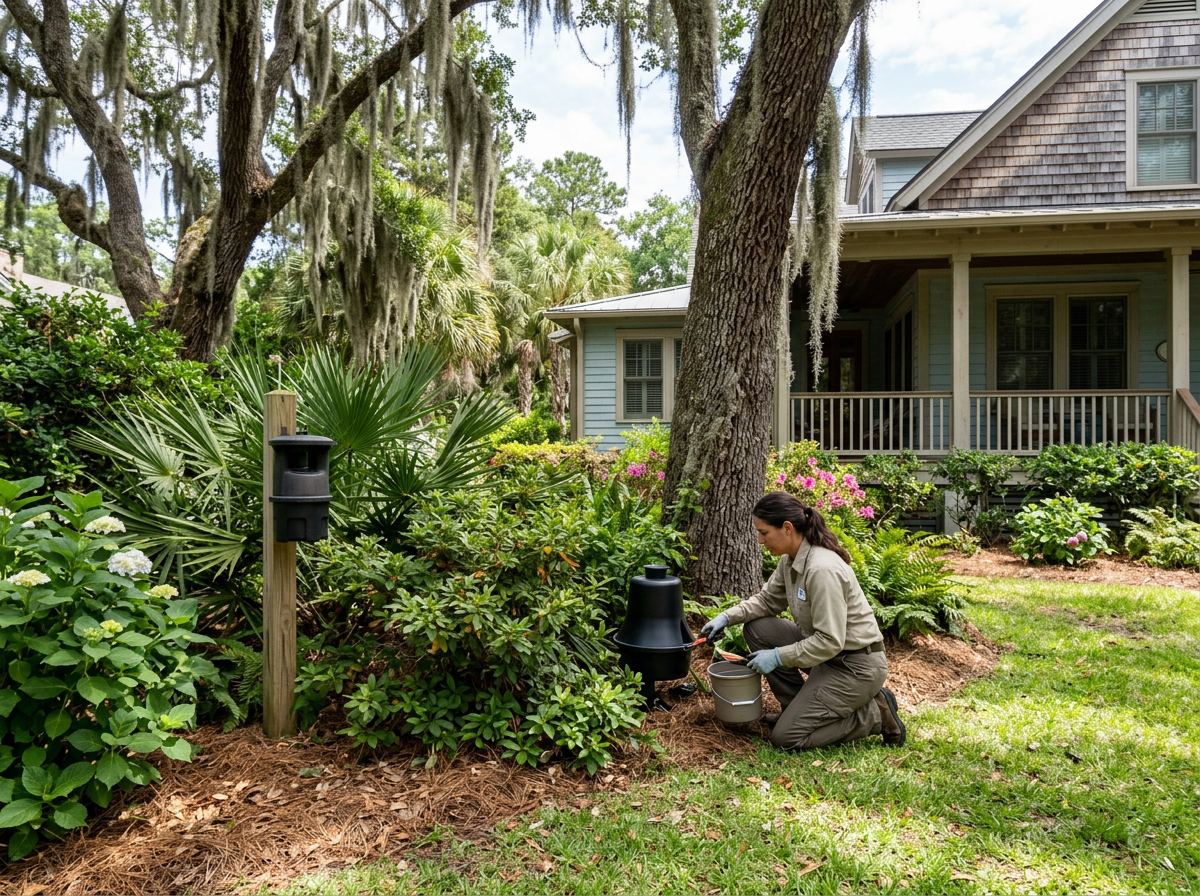
Beaufort sits amid tidal salt marsh on Port Royal Island where salt marsh mosquitoes and Asian tiger mosquitoes dominate. Salt marsh species breed in the high marsh that floods during king tides and storm surge while Asian tiger mosquitoes develop in any small container of water around homes. Live oaks draped in Spanish moss create deep shade where adults rest during the day and screened porches overlook Battery Creek or the Beaufort River. Our technicians walk the lot checking bromeliads, tree holes, gutters, birdbaths, and the crawl spaces under raised Lowcountry houses to locate breeding sites the county sprays never reach.
Trap stations work by attracting and capturing adult mosquitoes before they reach the porch or dock. Placement focuses on flight paths between the marsh edge and resting cover such as shrub beds, ivy under decks, and the underside of boat covers. We inspect at dawn and dusk when activity peaks and note how near-daily summer thunderstorms refill containers and wash away residues. Stations are positioned along property boundaries in neighborhoods like The Point and Spanish Point where tidal flooding pushes mosquitoes inland past the public roadside treatments.
After installation our technicians return on a schedule that accounts for rain wash-off and the long warm season from March into November. We clear debris from trap reservoirs, refresh attractants, and adjust locations when new standing water appears after heavy rains or when military family housing lots add kayaks and jon boats that create fresh breeding spots. This property-level work complements the county program by treating the shaded resting areas and container sites that aircraft and truck sprays cannot address on private land.
Technician insight
In Beaufort the thing that catches most people out with Mosquito Trap Stations is how king tides push salt water into the high marsh around The Point and Spanish Point, sending mosquitoes straight into the shaded live-oak yards where homeowners place traps only near the house instead of along the actual flight path from the marsh edge.
Trap Placement on Creek-Front Lot
A homeowner in Higginsonville saw daytime biters around the screened porch after recent tides. Inspection found larvae in bromeliads and tree holes plus heavy resting cover under the oaks. Stations were set along the property line facing the creek and residual treatment applied to shrub beds. Biting pressure on the porch dropped within the first week of service.
Mosquito Trap Stations Services We Offer
✓Strategic Trap Placement
Technicians map flight routes from marsh edges to shaded resting spots under live oaks and place stations to intercept salt marsh and Asian tiger mosquitoes before they reach porches or docks.
✓Weekly Trap Monitoring
Regular visits clear debris, refresh attractants, and check capture rates so stations continue working through tidal flooding and summer thunderstorms common on Lady's Island lots.
✓Larvicide Application near Traps
When standing water cannot be drained we apply insect growth regulator to containers, tree holes, and drainage swales that feed mosquitoes into the trap zones around the property.
✓Integration with Barrier Treatments
Trap stations are combined with residual applications to shrub beds, ivy, and crawl space vents so mosquitoes drawn to the traps also encounter treated resting surfaces on the lot.
✓Seasonal System Adjustments
Stations are relocated or added when king tides or tropical storm rains create new breeding sites along tidal creeks in neighborhoods such as Higginsonville and Mossy Oaks.
How it works
- 1
Site Walk and Breeding Audit
We inspect every potential container, tree hole, and low spot on the lot while noting marsh proximity and shade patterns created by live oaks and raised house piers.
- 2
Trap Selection and Positioning
Stations are chosen and set along likely flight lines between the marsh and the house, dock, or outdoor kitchen so they intercept adults before they reach people.
- 3
Initial Service and Activation
- 4
Ongoing Monitoring Visits
Return visits clear debris, refresh materials, and shift station locations when new standing water appears after rain or tidal flooding on the property.