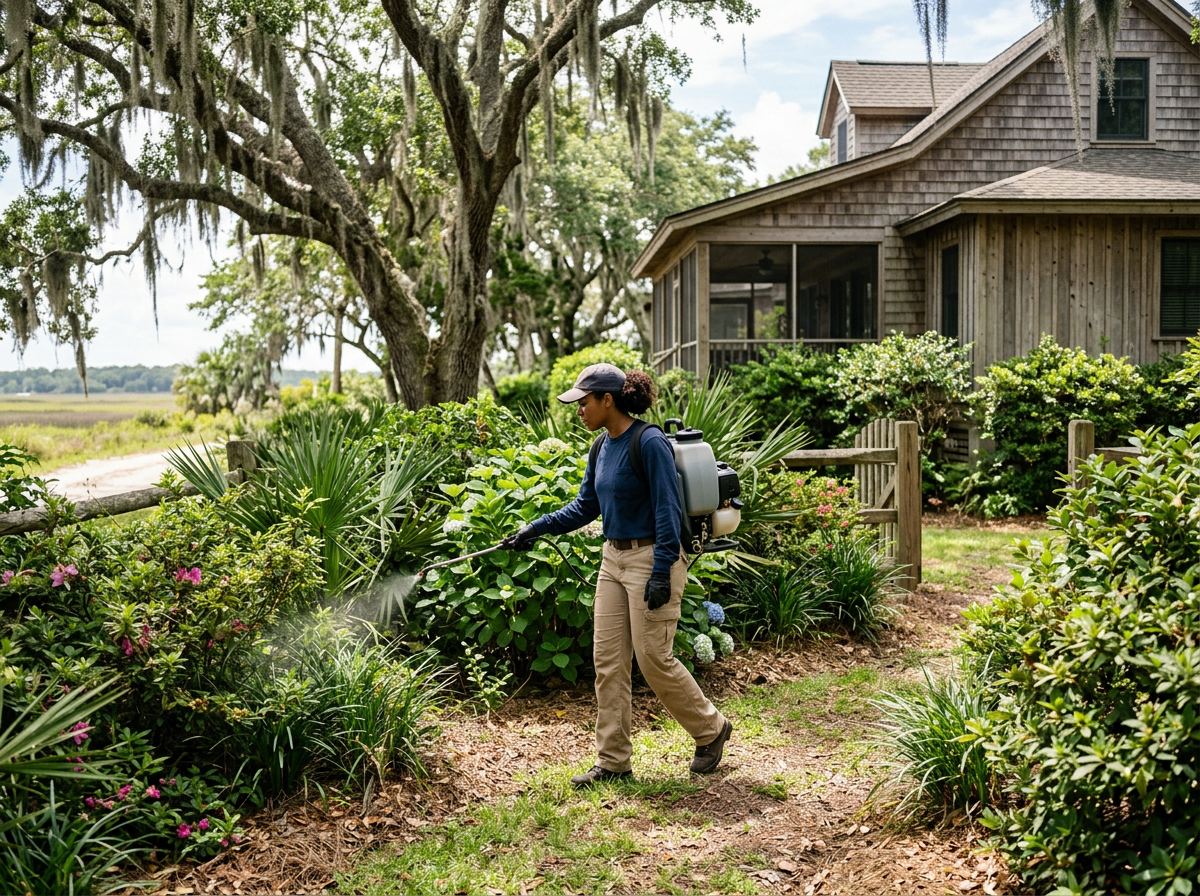
In Beaufort's humid subtropical climate, salt marsh mosquitoes and container-breeding species thrive from March through November because tidal flooding and frequent summer thunderstorms constantly refill water on lots near the Beaufort River and Port Royal Sound. Our technicians focus on the private yards the county truck and aircraft sprays never reach, checking under raised Lowcountry homes on piers, in crawl space vents, and along drainage swales in neighborhoods such as The Point and Spanish Point. We locate larvae and pupae in tree holes of live oaks draped with Spanish moss, plant saucers, gutters, and marsh-front docks where high tides push water onto the property.
Asian tiger mosquitoes and biting midges rest in shaded shrub beds and ivy during the day before becoming active at dawn and dusk, so we inspect every potential breeding pocket on the lot rather than treating only visible puddles. On tidal-creek properties near Lady's Island or Burton, we pay special attention to retention ponds, boat covers, and kayaks that collect rainwater after storms. Our backpack mist blower delivers larvicide and insect growth regulator precisely to these sites without affecting the rest of the yard.
We return on a schedule that accounts for rain wash-off and re-flooding from king tides, rechecking under decks, in bromeliads, and along the Spanish Moss Trail corridor where military housing and historic homes often have hidden water sources. This property-level work complements the county's area-wide efforts by stopping mosquitoes before they emerge from individual lots in Downtown Beaufort or Higginsonville.
Technician insight
In Beaufort the thing that catches most people out with Mosquito Larvicide Treatment is how quickly king tides and afternoon thunderstorms refill sites on lots near Battery Creek or the Coosaw River; a single missed tree hole in a live oak or a tarp over a jon boat can restart the cycle within days.
Marsh-Edge Lot in Spanish Point
A homeowner near the Point noticed daytime biters around the screened porch after recent high tides. We found larvae in several live oak cavities and a drainage swale that tidal water had reached. Our technicians applied larvicide to those sites and the containers along the dock; the client reported fewer mosquitoes within a week.
Mosquito Larvicide Treatment Services We Offer
✓Retention Pond and Swale Larvicide
We treat standing water in retention ponds and drainage swales that collect tidal overflow and stormwater on marsh-front lots.
✓Container and Plant Saucer Treatment
Technicians apply larvicide to birdbaths, plant saucers, bromeliads, and other small containers where Asian tiger mosquitoes breed around porches and gardens.
✓Tree Hole and Live Oak Larvicide
We locate and treat water trapped in live oak tree holes and cavities that hold larvae through the long warm season.
✓Dock and Boat Cover Larvicide
Our crews treat water that collects in dock boxes, tarps, jon boats, and kayaks stored near tidal creeks and the Intracoastal Waterway.
✓Crawl Space and Under-Deck Treatment
We reach breeding sites beneath raised houses on piers and under decks where shaded water persists after thunderstorms.
How it works
- 1
Lot Inspection
Our technicians walk the entire property, checking every low spot, container, and shaded area for larvae and pupae.
- 2
Breeding Site Identification
We map active sites including tree holes, ditches, and marsh edges that refill with tidal water or rain.
- 3
Targeted Larvicide Application
We apply larvicide and insect growth regulator directly to water that cannot be drained using precise equipment.
- 4
Re-inspection and Adjustment
We return after the next rain or high tide to confirm control and treat any new water that has appeared.