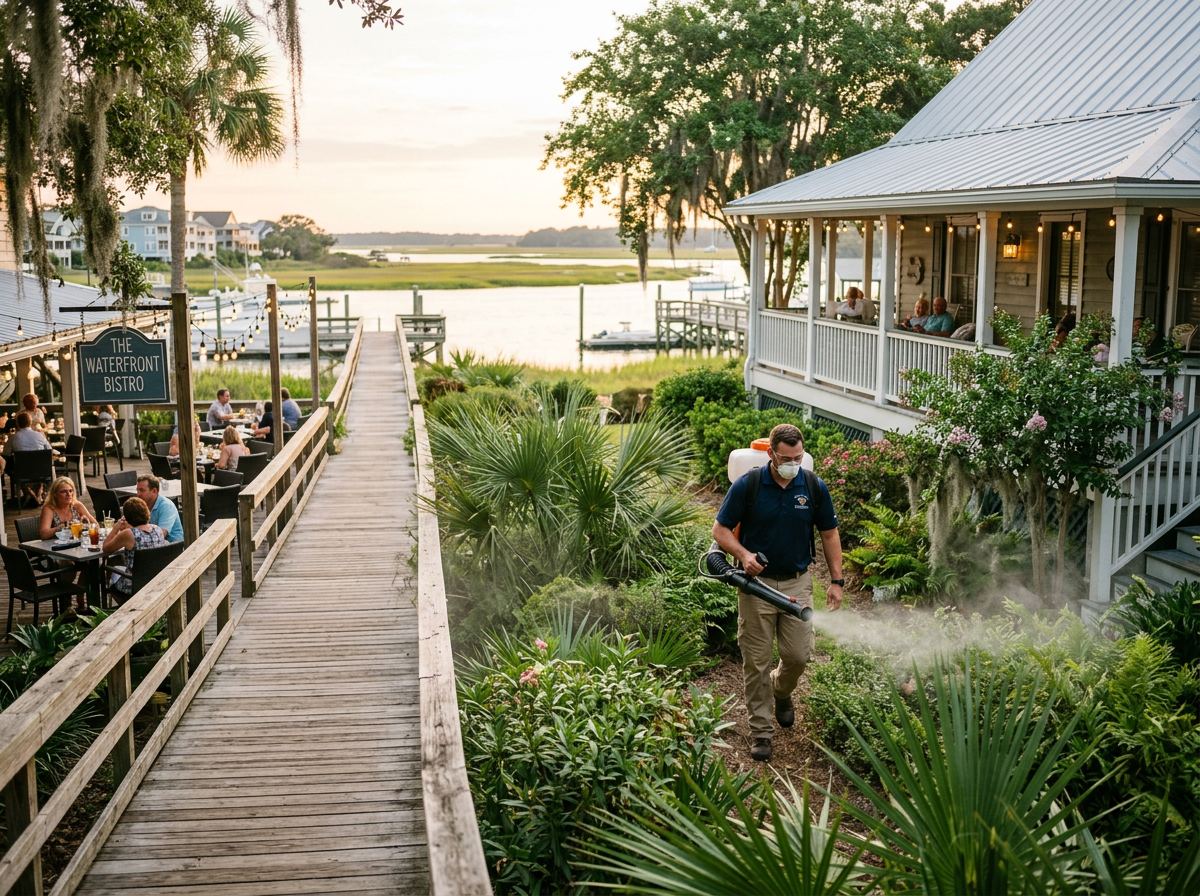
Okatie sits along the Okatie River on the edge of the Lowcountry marshes that feed salt marsh mosquitoes into nearby yards. County sprays cover roads and public zones but stop at property lines, leaving shaded oak groves, drainage swales and retention ponds on individual lots to breed larvae after every rain or king tide.
Our technicians arrive with backpack mist blowers to hit resting spots under decks, in shrub beds and along crawl spaces typical of raised Lowcountry homes here. We also place larvicide where water cannot be drained and check plant saucers, gutters and boat covers that hold container breeders through the long warm season.
The same coastal influence that keeps winters mild extends mosquito pressure from March into November, with daytime Asian tiger mosquitoes and no-see-ums adding to evening bites near tidal creeks and ditches that line SC-170.
Around Okatie
We regularly work near:
- 📍Okatie River
- 📍SC-170 (Robert Smalls Pkwy)
- 📍Habersham
Mosquito Control in Okatie — Local Notes
- •Many Okatie lots back up to pine woods and drainage ditches that stay damp after summer thunderstorms, creating breeding sites that require targeted larvicide beyond what roadside county work reaches.
- •Gated communities and riverfront homes often feature retention ponds and marsh edges where tidal flooding brings in new waves of salt marsh mosquitoes after each high tide cycle.
- •Raised houses on piers and deep porches under live oaks create shaded resting areas and crawl space vents that need residual barrier treatment on the underside of leaves and around foundations.