2026-11-13 ·
No-See-Ums vs Mosquitoes in the Lowcountry: What Is Biting You
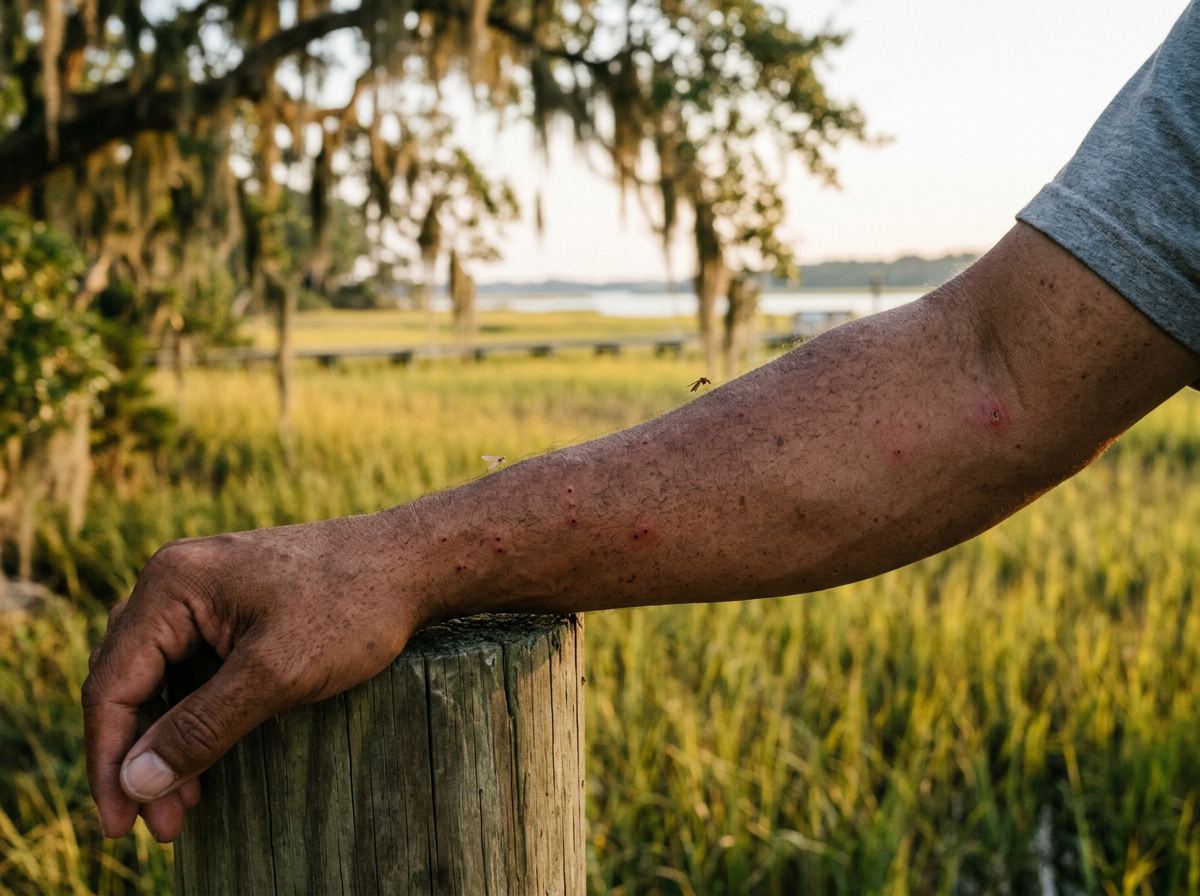
No-see-ums, also called biting midges or sand gnats, are the smaller daytime biters that often trouble homeowners on Lady's Island and the Sea Islands, while mosquitoes tend to feed at dawn and dusk in shaded yard areas. Both insects breed in the humid subtropical conditions with frequent tidal flooding and standing water near the Beaufort River and Port Royal Sound.
Distinguishing Physical Traits and Bite Patterns
No-see-ums measure only 1-3 millimeters and appear as tiny dark specks that are hard to see until they land, whereas mosquitoes are larger with visible wings and longer legs. Homeowners in neighborhoods such as The Point or Spanish Point often notice no-see-ums biting during daylight hours on exposed skin, while mosquitoes become active near dusk around docks and under live oaks draped with Spanish moss. The bite from a no-see-um creates a small, itchy welt that can last longer because the insect injects saliva to thin blood, and the same holds for mosquitoes though their bites usually cluster on lower legs and ankles after sunset. Our technicians inspect for these patterns during yard visits by checking activity at different times of day on properties with marsh edges or raised Lowcountry homes on piers. Our botanical mosquito treatment page explains how we handle this on a local lot.
Local Habitats That Favor Each Insect
Salt marsh mosquitoes develop in the high marsh areas flooded by king tides around St. Helena Island and Fripp Island, while container-breeding species and Asian tiger mosquitoes use plant saucers, gutters, and tree holes in live oaks common throughout Downtown Beaufort and Higginsonville. No-see-ums prefer the damp soil and leaf litter near tidal creeks and retention ponds on lots in Burton or Mossy Oaks, where they rest in shrub beds and ivy during the day. Tidal flooding and near-daily summer thunderstorms create breeding sites that persist from March through November, and readers can check Beaufort County Mosquito Control for current spray notices on public roads and waterways. Our approach focuses on the private yard itself, treating shaded resting areas under decks, crawl space vents, and dock boxes that county truck or aircraft applications do not reach. Yards in Dataw Island deal with this regularly.
Practical Steps to Identify What Is Biting You
Observe bite timing by sitting outside at dawn, midday, and dusk near Henry C. Chambers Waterfront Park or along the Spanish Moss Trail to note whether activity peaks during daylight or low light. Check for small larvae in birdbaths, bromeliads, and drainage swales on your lot, then look for adult insects resting on the underside of leaves or in screened porches. Residents on marsh-front properties can review our related guide on tidal lots to see how these conditions increase bites. No-See-Um Control targets the specific resting spots and breeding sites that differ from standard mosquito work, and Marsh-Front and Dock Living: Why Tidal Lots Get More Bites explains additional local factors. A Mosquito Yard Inspection helps pinpoint whether no-see-ums or mosquitoes dominate on your Sea Islands home.
How Private Treatments Address Each Pest
Barrier applications with a backpack mist blower reach the underside of leaves and shrub beds where no-see-ums rest, while larvicide treatments focus on water that cannot be drained such as tree holes or ditches on lots in Port Royal. Does Beaufort County Spray for Mosquitoes? What It Covers and What It Does Not outlines the public service limits, confirming that individual yards, porches, and docks require separate work by our technicians. Seasonal programs combine residual treatments on shaded areas with checks for gutters, tarps, and kayaks that hold water after storms. This targeted method fits homes in Habersham or Laurel Bay where both insects overlap due to proximity to Battery Creek and the Broad River.