Salt marsh mosquitoes and Asian tiger mosquitoes dominate Beaufort lots because tidal flooding and king tides push larvae into high marsh edges and drainage swales along the Beaufort River and Battery Creek. Container-breeding species also thrive in tree holes of live oaks, plant saucers, bromeliads and gutters on antebellum homes in The Point and Spanish Point. Our technicians walk each lot at dawn or dusk to map breeding sites and daytime resting areas under decks, in ivy beds and on the underside of porch ceilings before any product touches the property.
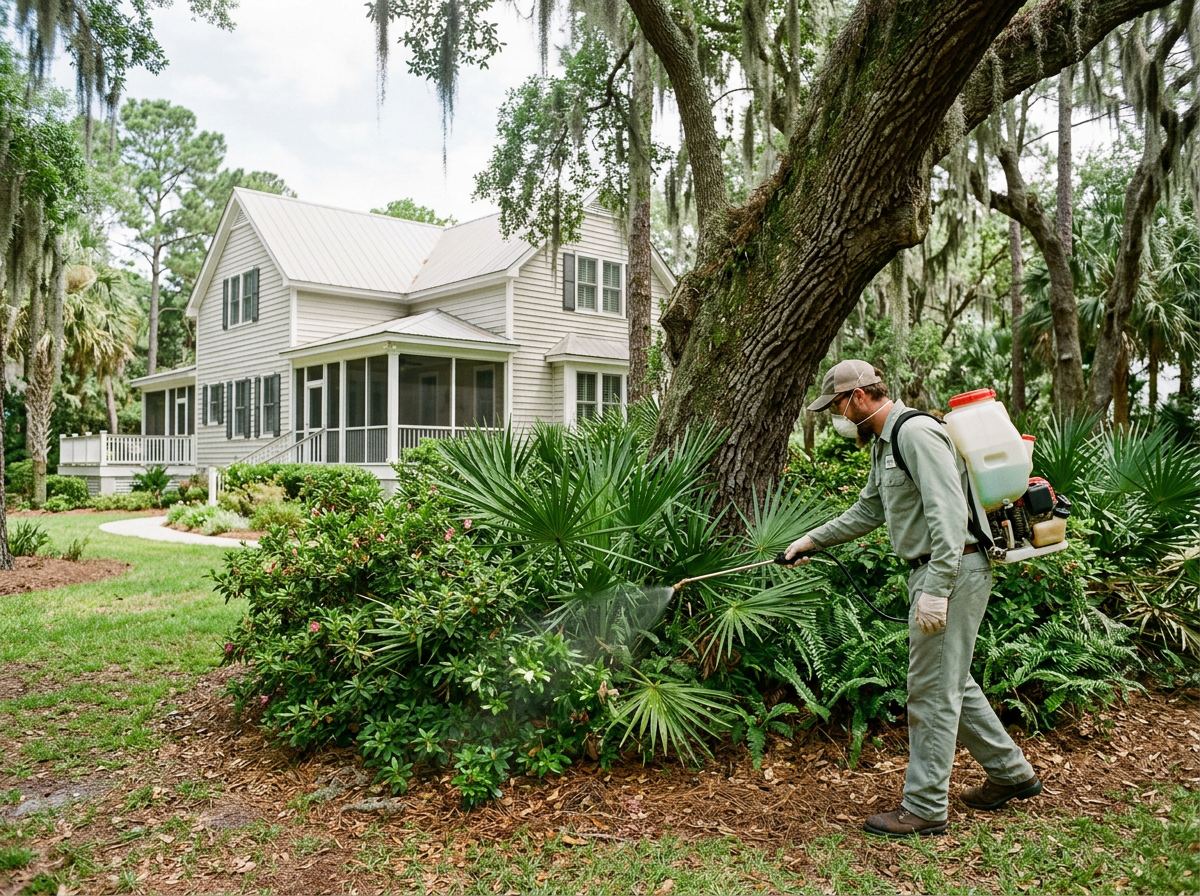
Once inspection is complete we apply residual botanical material with a backpack mist blower to shrub beds, live-oak canopies and crawl-space vents so the treatment stays on foliage even after near-daily summer thunderstorms. Larvicide is placed only in water that cannot be drained, such as low spots near marsh-front docks or retention ponds on Lady's Island properties. Re-treatment intervals are set according to rain wash-off and the next high-tide cycle rather than a fixed calendar.
Homeowners in Downtown Beaufort and Higginsonville often overlook how Spanish moss and deep porches create cool, humid microclimates that hold mosquitoes through mild winters. We treat those exact resting zones plus any screened outdoor kitchens or jon boats stored on the lot. Follow-up visits focus on new breeding sites created by recent tidal surge or roof runoff that homeowners cannot see from the house.
Technician insight
In Beaufort the thing that catches most people out with Botanical Mosquito Treatment is how king tides after a full moon push water into the high marsh right up against the back fence on marsh-front lots in Spanish Point and The Point; if you do not walk that edge the day after the tide, new larvae hatch in pockets the standard yard spray never touches.
Marsh-Edge Lot After King Tide
A raised house on Lady's Island near the McTeer Bridge had standing water in swales after a king tide. We found larvae in drainage ditches and adults resting under the deck and in live-oak canopy. Technicians applied larvicide to the water pockets and barrier material to foliage and deck underside; the homeowner reported noticeably fewer bites on the porch within two days.
Botanical Mosquito Treatment Services We Offer
✓Tidal Edge Barrier Treatment
Targets salt marsh mosquitoes moving from high marsh into yards along Battery Creek and the Intracoastal Waterway.
✓Live Oak Canopy Application
Covers shaded resting areas in the dense canopy and Spanish moss common on Point and Spanish Point lots.
✓Container Breeding Site Service
Locates and treats larvae in gutters, birdbaths, bromeliads and boat covers that county spraying never reaches.
✓Under Deck and Crawl Space Treatment
Applies material to the underside of raised Lowcountry houses and vented crawl spaces where mosquitoes rest during the day.
✓Dock and Porch Perimeter Service
Protects screened porches, outdoor kitchens and marsh-front docks from daytime biters and evening activity.
How it works
- 1
Lot Inspection
Technicians walk the full property, checking tree holes, drainage ditches, plant containers and shaded foliage for active larvae and resting adults.
- 2
Site Preparation
We move or cover tarps, kayaks and birdbaths, then flag any standing water that requires larvicide before the main application.
- 3
Botanical Application
Residual material is applied with a backpack mist blower to resting vegetation, leaf undersides and structural edges while larvicide is placed only where water cannot be removed.
- 4
Follow-Up Timing
Return visits are scheduled after the next significant rain or king tide to check for new breeding sites created by tidal flooding or roof runoff.